Booking a guided paddling tour sounds simple until you start reading listings. One outfitter is selling a "wildlife eco-tour at golden hour." Another is selling a "sunset SUP experience with dolphins." A third is running a five-day canoe expedition and wants to know if you can pack a dry bag. These are not all the same product, and the price, difficulty, and payoff differ more than the marketing suggests.
The categories below are the ones that recur across kayak liveries, SUP schools, and canoe outfitters, from an hour on a lagoon to a week of moving camp. Knowing which bucket a trip falls into is the fastest way to match your ability, budget, and reason for going out to the right operator.
Wildlife tours: paying to be in the right place at the right time
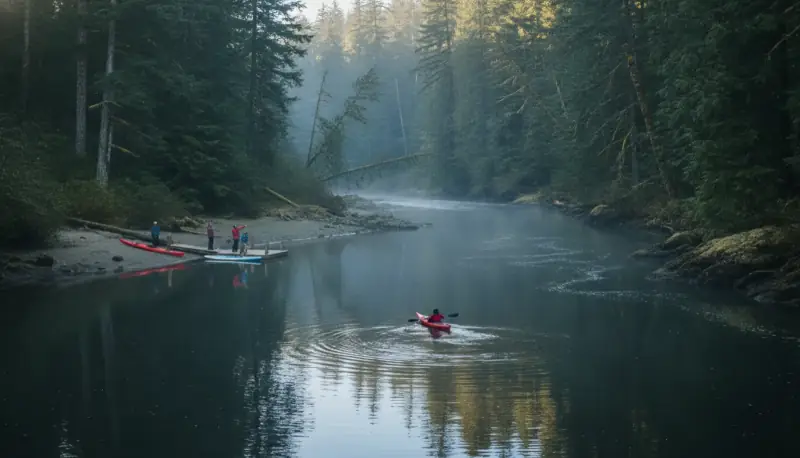
A wildlife tour is a guided paddle through a habitat where you can reasonably expect to see something. Coastal estuaries and mangrove tunnels for manatees, wading birds, and the occasional dolphin. Blackwater rivers for alligators and turtles. Sea caves and kelp for otters and harbor seals. Cold-water bays for whales at the surface.
What you are actually paying for is timing and access. A good wildlife guide knows the tides, the seasonal patterns, and which cove has been productive that week. They also know how close is too close, the ethical rule of thumb is that if an animal changes its behavior because of you, you are too close. Federal marine mammal rules and refuge-specific distances apply on many U.S. waters; the operator is responsible for keeping the group compliant, and a good one will explain the limits before you launch.
A few things to look for when comparing wildlife trips:
- Group size. Six to eight boats is the practical ceiling for a guide to keep everyone quiet and in position. Larger groups spook animals and spend more time regrouping than watching.
- Season honesty. Manatees, whales, salmon runs, nesting birds, these are seasonal. An operator who promises sightings year-round is selling paddling, not wildlife.
- Equipment. Sit-on-top kayaks are common in warm water; sit-inside boats and skirts are the norm in cold water. Binoculars are almost never provided; bring your own.
Expect two to four hours on the water, a stable recreational or touring boat, and a guide who spends as much time watching the horizon as watching you.
Sunset paddles: the easiest entry point
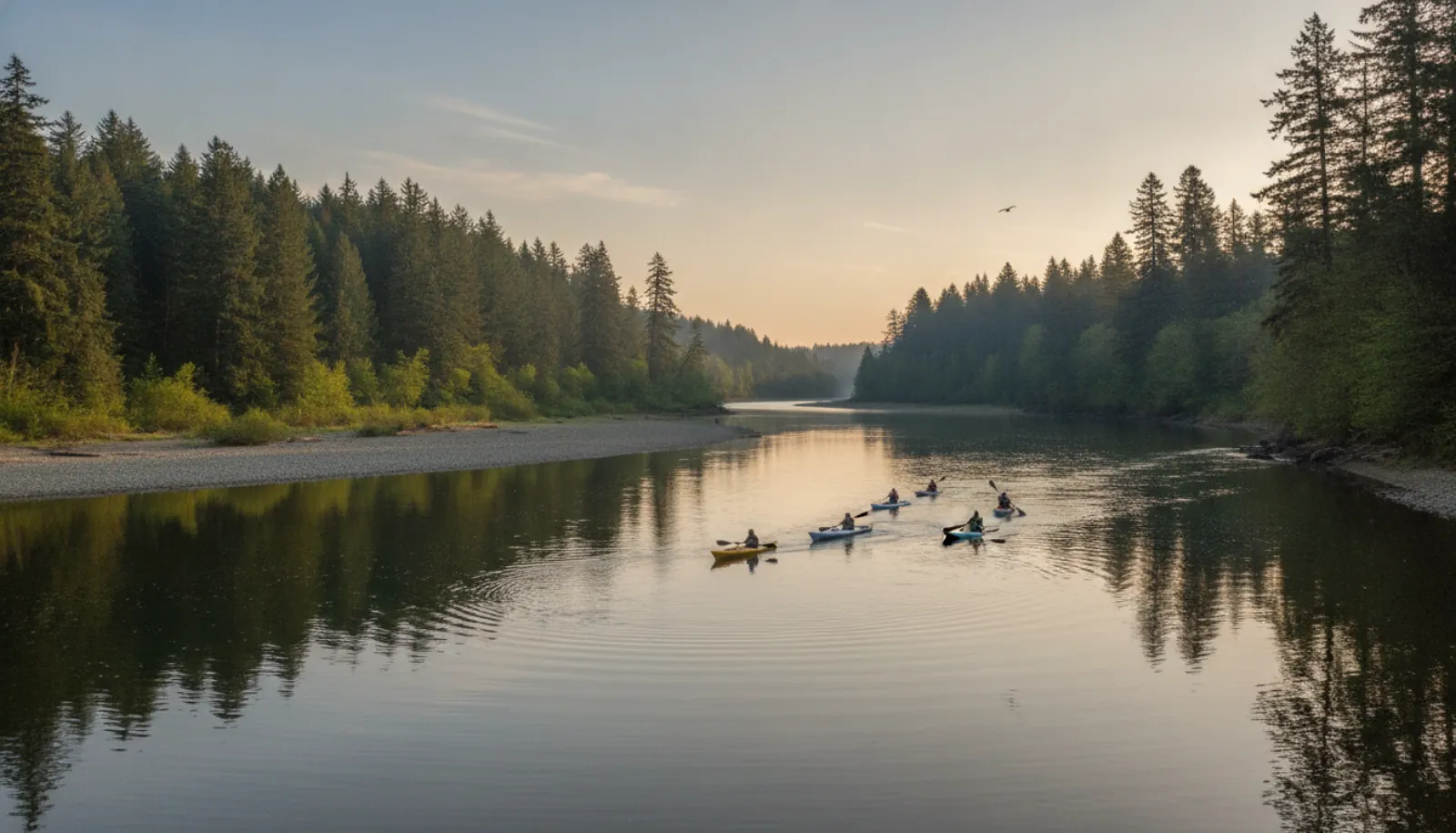
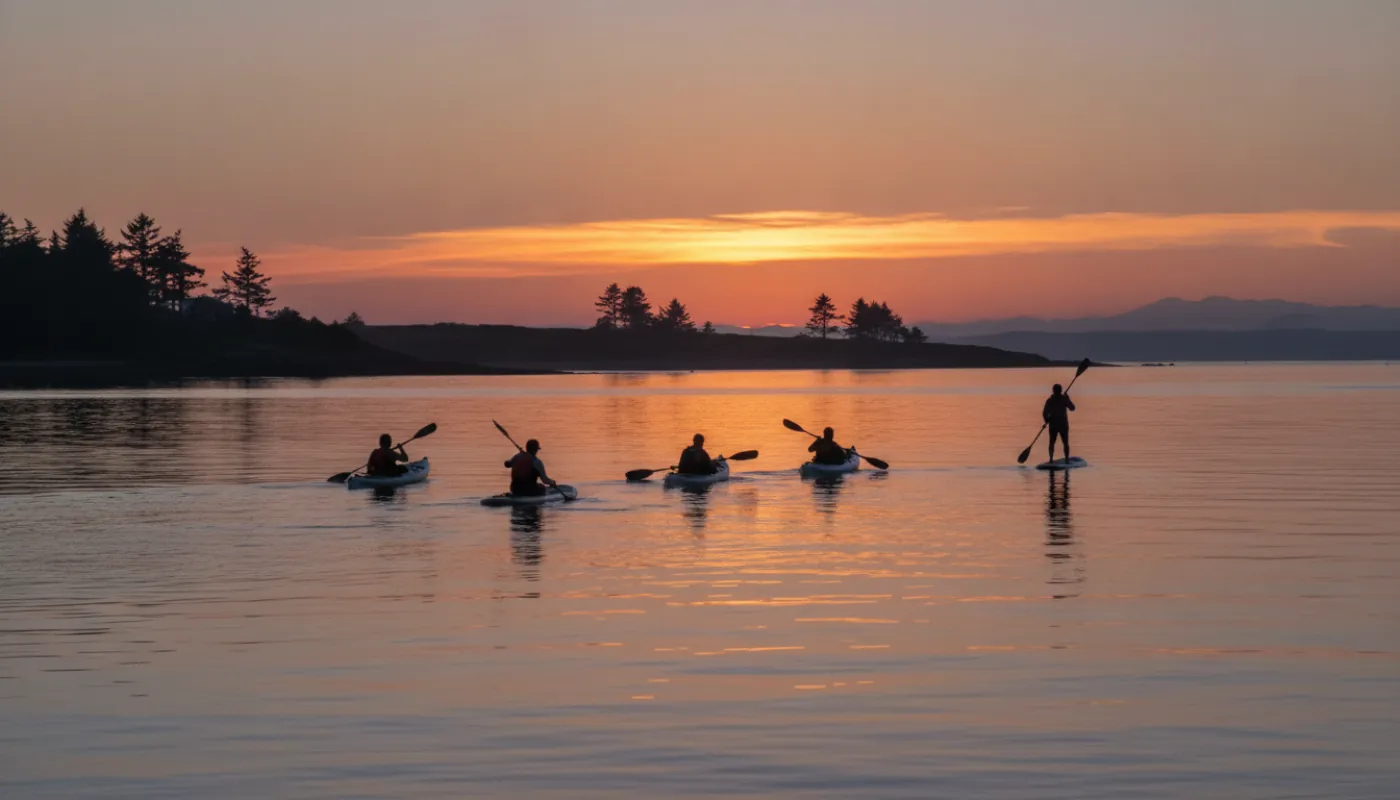
Sunset tours are the shortest, most accessible category, and they are how most people take their first guided paddle. The window is short (usually 90 minutes to two hours, launching an hour or so before sunset and returning at dusk), and the water is typically flat: a harbor, a lake, a protected bay, or a slow river.
The appeal is obvious. The light is good, the wind usually drops, and the trip is over before anyone's shoulders are sore. Sunset SUP tours in particular have become the default introductory product at coastal and lake-town rental shops because a standup board is intuitive on glassy water.
The tradeoff is honesty about what you are getting. A sunset paddle is a scenic outing, not an expedition. It is not the trip to book if you want to cover distance, learn technique, or reliably see wildlife. It is the trip to book if you want a pleasant evening on the water with someone else worrying about the boats and the return route.
Two practical notes:
- Lights are legal gear after sunset. In the U.S., a paddlecraft on the water after dark needs at least a handheld white light to show to approaching vessels (USCG rules). A reputable operator supplies this.
- Weather cancels more sunset tours than any other category. The margin for wind or thunderstorms is small at the end of the day. Book with an outfitter that has a clear refund or reschedule policy.
Eco-tours: interpretation, not just paddling
"Eco-tour" is used loosely, but the honest version of the product is a guided paddle where the guide is also a naturalist or interpreter. You are paying for the explanation as much as the outing. On a well-run eco-tour you learn what the ecosystem is, how it functions, why it is threatened, and what a paddler's role in it looks like.
The strongest eco-tours tend to be run by operators with a formal conservation tie: a partnership with a state park, a refuge, a land trust, or a nonprofit research group. Some run in officially designated areas (national estuarine research reserves, national wildlife refuges, water trails managed by a state agency), where the operator holds a permit and follows a stewardship plan.
Signs the "eco" label is meaningful:
- The guide's background is spelled out: biology, ecology, guiding certifications, years in the area.
- The trip discusses a specific ecosystem in specific terms, not generic "nature."
- Group sizes are capped, and there is a clear leave-no-trace protocol for shore stops.
- The operator can name the agency or organization they work with.
Signs it is marketing:
- The word "eco" appears more often than any ecosystem name.
- The itinerary is indistinguishable from a standard rental with a guide added.
- The wildlife promises are absolute.
Eco-tours generally run three to five hours and cost more than a comparable sunset paddle. The premium reflects the guide's expertise, not the boat.
Multi-day expeditions: a different sport
A multi-day guided paddling trip (most commonly a canoe expedition on a wilderness river system, a sea kayak coastal traverse, or a lake-country route), is not a longer version of a day tour. It is a different sport, closer to backpacking on water than to a rental.
The trip involves moving camp: paddling a stretch, portaging around rapids or between lakes where required, setting up a wilderness camp, cooking, breaking camp, and doing it again. Guides handle route selection, safety, and usually the heaviest logistical loads (permits, group gear, food planning). You are expected to paddle your own boat, carry your share, and be self-sufficient inside a small group for several days.
What outfitters typically provide
Most reputable multi-day outfitters supply the boats, paddles, PFDs, tents, cook kit, group food, water treatment, and the permits for the route. You usually bring your own sleeping bag, sleeping pad, personal clothing, dry bags, and rain gear. Confirm the packing list line-by-line; assumptions are expensive on day two of a trip.
Fitness and skill honesty
The single most common failure mode on a multi-day trip is booking above your ability. A five-day canoe route with 15-mile paddling days and multiple portages is not appropriate for someone who has never paddled loaded. If you are new to loaded touring, look for shorter expeditions (two to three nights, easier water, minimal portaging) or a base-camp trip where you paddle from a fixed camp each day. Any guide worth booking with will ask about your experience before taking your deposit; if they do not, that is information.
Cost structure
Multi-day trips are the most expensive category on a per-day basis, and the price includes food, permits, group gear, and guide wages for the full duration. A trip that looks cheap for its length usually indicates fewer guides, larger groups, or shortcuts on food and safety gear. Ask what is included, what is not, and what the guide-to-guest ratio is.
Guided SUP tours: a category worth its own line
Standup paddleboard tours have their own quirks. They are almost always run on flat, protected water (bays, lakes, slow rivers, lagoons), because SUP handles wind and chop poorly compared to a kayak. Trips are typically shorter (60 to 120 minutes) and priced closer to sunset paddles than to eco-tours.
The upside of a guided SUP tour is that you get a lesson embedded in the outing. A good SUP guide will spend the first ten minutes on stance, paddle grip, and how to fall, which is more useful than it sounds. The downside is that SUP is more weather-sensitive than sitting in a boat; a 12-knot breeze that is fine in a kayak will end a SUP tour early.
Choosing between them
Match the category to your reason for going out, not to the marketing photo. A short summary:
| If you want to… | Book a… | Typical length |
|---|---|---|
| Try paddling for the first time | Sunset paddle or guided SUP tour | 1–2 hours |
| See specific animals in habitat | Wildlife tour | 2–4 hours |
| Understand the ecosystem you're in | Eco-tour | 3–5 hours |
| Cover distance and camp on the water | Multi-day expedition | 2–7+ days |
Two rules that apply across every category:
- The guide matters more than the boat. A great guide in a rental fleet beats a mediocre guide in premium boats every time. Read reviews about the guiding, not the equipment.
- Cold water changes everything. In water below roughly 60°F, exposure is the risk that overshadows all others. On any cold-water trip, expect (and demand) real safety briefings, appropriate thermal protection, and a guide who will turn the trip around if conditions shift. NOAA and the National Weather Service publish local marine and small-craft forecasts worth checking the morning of any coastal trip.
If you are still deciding where to go, browsing paddling destinations by region is a useful next step, you can see which operators run which categories before you commit. And if you run a paddling business and want to be listed alongside them, our signup page walks through how listings and hubs work.
Guided tours exist on a spectrum from "pleasant evening" to "genuine expedition." The category is the honest signal. Pick the one that matches what you actually want, and the trip usually takes care of itself.