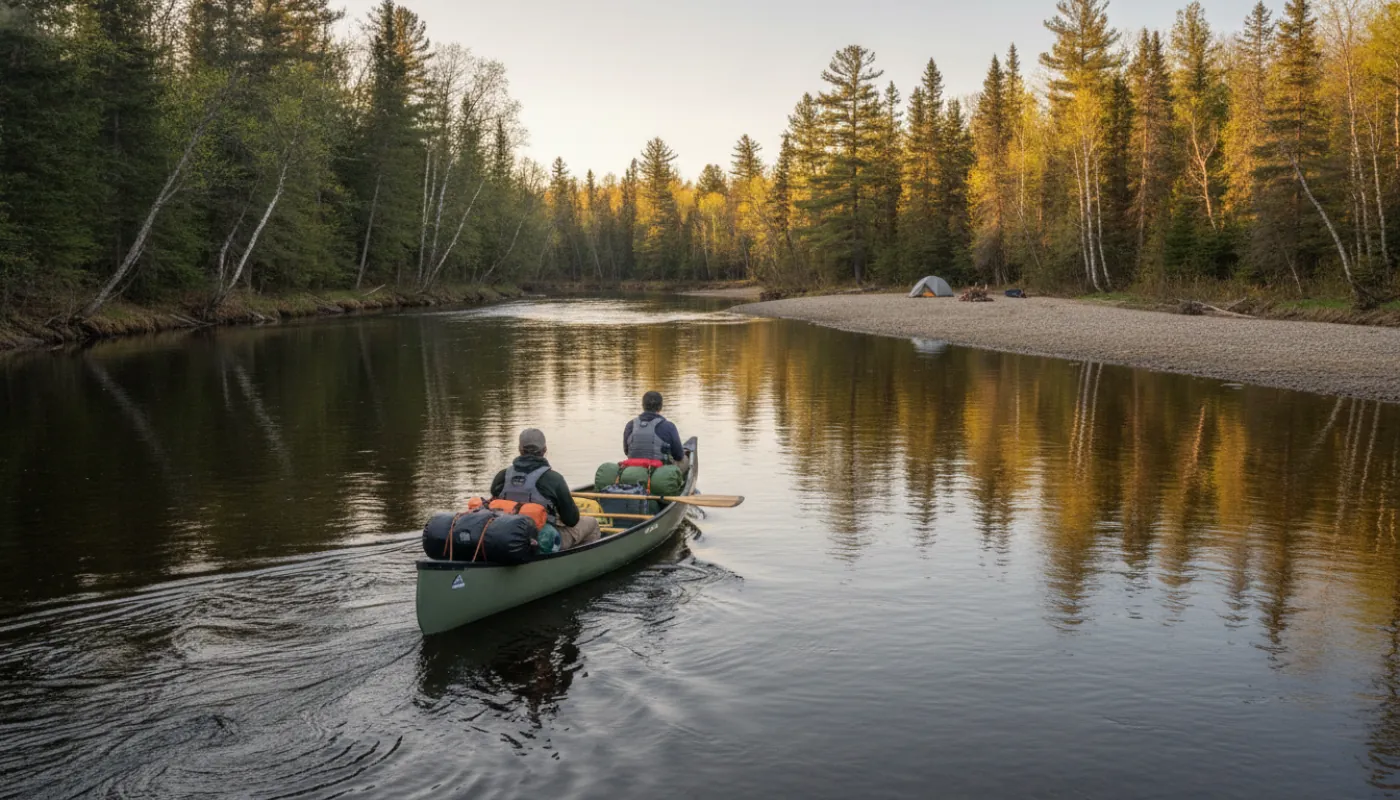
Multi-day canoe trips are a different animal than day paddles. You're managing a camp, hauling everything on your back, reading water for hours on end, and depending entirely on your ability to navigate and set up safely miles from any road. The good news: with solid planning, they're accessible to competent paddlers and moderately fit campers. The bad news: poor planning shows itself quickly and painfully. This guide walks you through the five non-negotiable planning steps every multi-day trip needs.
Research Your River and Understand Permit Requirements
Before you pick dates or scout campsites, you need to know what river you're paddling and who owns it. Start by contacting the agency that manages the waterway: the relevant state wildlife department, National Park Service unit, Bureau of Land Management district, or U.S. Forest Service ranger station. Regulations, permit requirements, and season dates vary dramatically by location and change yearly, so never rely on memory or outdated trip reports.
Ask specifically about permit availability, group-size limits, minimum-flow requirements, and restricted stretches. Some rivers require advance reservations; others operate on a first-come basis. Some close during certain seasons. Some prohibit camping on certain banks or near archaeological sites. Get the official word in writing, then print it. When you're sitting at a campfire mid-trip, you won't be wondering whether you needed a permit or whether next Tuesday is a closure date.
Check the U.S. Geological Survey (USGS) water-gauge database for your river. Water levels directly affect difficulty, travel time, and safety. A stretch that's Class II at moderate flow can become pushy or unrunnable at low water; high water can turn manageable rapids into chaotic ones. Learn how to read your river's gauge and what flow range is appropriate for your group's skill level. Local paddling clubs and outfitters often publish recommended flow ranges for specific sections, this is gold. Use it.
Select and Test Your Gear Before the Trip
Paddling camping demands equipment that handles weight, water exposure, and multi-day durability. Your canoe must be stable enough to handle camp gear and a second paddler, and preferably capable of self-rescue if you swim. If you're borrowing a canoe for a trip, spend a day on flat water first; know its turning radius, freeboard with loaded weight, and how it responds when one side is heavier than the other.
Your personal flotation device must fit well enough to wear for eight hours a day without chafing. Many paddlers find a thin, high-arm-position PFD more comfortable than a bulky one for long-distance trips. Whatever you choose, wear it the entire time you're on the water, no exceptions, no "it's calm here." Mandatory cold-water safety: know the water temperature before you go. If it's below 60°F, wear a wetsuit or drysuit regardless of air temperature. Hypothermia kills quickly and silently.
Pack shelter, sleeping gear, and clothing into dry bags in a canoe-ready configuration. One or two large dry bags fit the boat better than ten small ones. Test your packing on a short overnight trip first. You'll discover quickly whether your gear arrangement works, whether your bags are truly waterproof, and whether the weight distribution allows the canoe to track straight. Never discover this three days into a five-day trip.
Map Your Route and Understand Portaging
A portage is the carry between paddleable sections of river: around a waterfall, over a watershed divide, or between disconnected waterways. Multi-day trips almost always involve portages. Knowing their locations, distances, and difficulty changes everything about your schedule and gear choices.
Use official river maps and guidebooks specific to your river. Many regions publish waterproof maps with put-in and take-out locations, rapid names, campsite locations, and portage markers clearly labeled. If you can't find a printed guidebook, reach out to the local outfitter or paddling club, they often have trip reports with GPS coordinates and current portage conditions. Never wing portage locations based on a topographic map and hope. Portages can be poorly marked, overgrown, or relocated after high water moves trees.
Estimate travel time conservatively. A loaded tandem canoe makes roughly 2–3 mph on flat water; plan around the low end and adjust downward for headwinds, portages, breaks, and scout time. Many trip planners fold all of that into an even more conservative daily-mileage figure rather than a raw paddling speed. Add 50% if anyone in your group is paddling for the first time on a multi-day trip. Build rest days into longer itineraries; pushing hard every day leaves no buffer for weather delays, unexpected wildlife encounters, or simply needing a mental break. Plan your campsites in advance, identify backups on the map, and know what water and fire regulations apply to each one.
Read Water and Navigate Safely
Paddling unfamiliar rivers requires constant attention to current, gradient, and hazards. Learn to read water: current speed changes, eddy lines, the two kinds of V (a smooth downstream-pointing V is the tongue: the clear, deep channel you usually want; a turbulent upstream-pointing V marks a submerged rock to steer around), reversal waves, and the roar of rapids downstream. Approach any rapid you haven't scouted on foot. Stop the canoe, tie up, and walk along the bank to inspect the line. A rapid that looks runnable from the boat often reveals a pinning rock or undercut bank from shore. Never guess.
Use maps and, if available, a GPS unit loaded with waypoints and the planned route. Maps are bulletproof, a dead GPS battery or a dropped unit leaves a map still readable. Navigate by river landmarks and mile markers if your river has them, cross-referencing constantly with your map. Confirm that the rapid you're looking at on the river matches the rapid marked on your map; it's easy to misidentify sections under time pressure or in unfamiliar terrain.
Always paddle with someone experienced with your river, or hire a guide the first time. A local paddler or outfitter-led trip is not overkill; it's the fastest way to learn the actual conditions and safe lines. Reading a guidebook is preparation; paddling it with someone who knows the river is education.
Prepare for Weather and Choose Your Season Wisely
Backcountry camping means no shelter except what you bring. Weather can turn a pleasant paddle into a survival situation in hours. Before you leave, check the extended forecast, learn what the water temperature will be, and understand how cold, wind, and rain interact with paddling and camping. Spring and early fall typically offer moderate temperatures and more stable weather than summer thunderstorm season.
Know the seasonal water patterns on your river. Many paddling regions have distinct paddling seasons tied to snowmelt, rainfall, or temperature thresholds. Paddling during the recommended window vastly improves the odds of good water levels, moderate temperatures, and established campsites marked and cleared by previous years' traffic. Paddling outside the season often means low water, overgrown campsites, or closed access, all unnecessary risks.
Cold water is not the friend of paddlers and campers. Below 60°F, you need protective gear beyond a PFD. Wet clothing in cold, windy conditions can drive hypothermia fast, no single temperature reliably predicts it, so dry off and change into dry layers the moment you land whenever air or water is cold. If your river runs cold, bring an extra change of clothes in a dry bag, set up a camp routine that prioritizes dry layers immediately after landing, and consider paddling with a group large enough that someone can go for help if you get genuinely hypothermic.
Pack a satellite communicator or PLB (personal locator beacon) if your trip goes more than a day from cell coverage. Check the weather forecast the morning of your first paddle day, but do not let forecast anxiety paralyze you. Plan for realistic conditions, travel conservatively, and know how to recognize when conditions are unsafe to paddle and when to camp an extra day waiting them out.