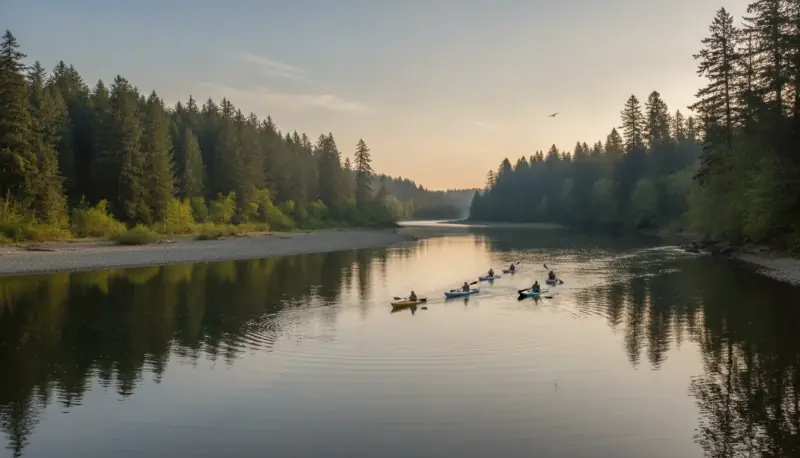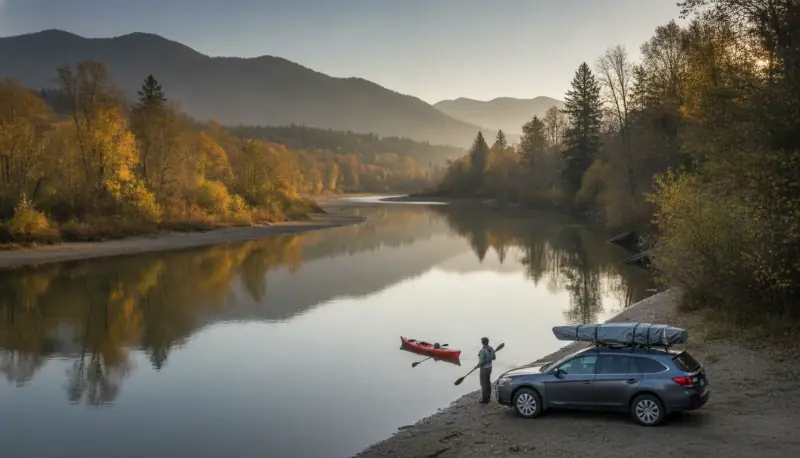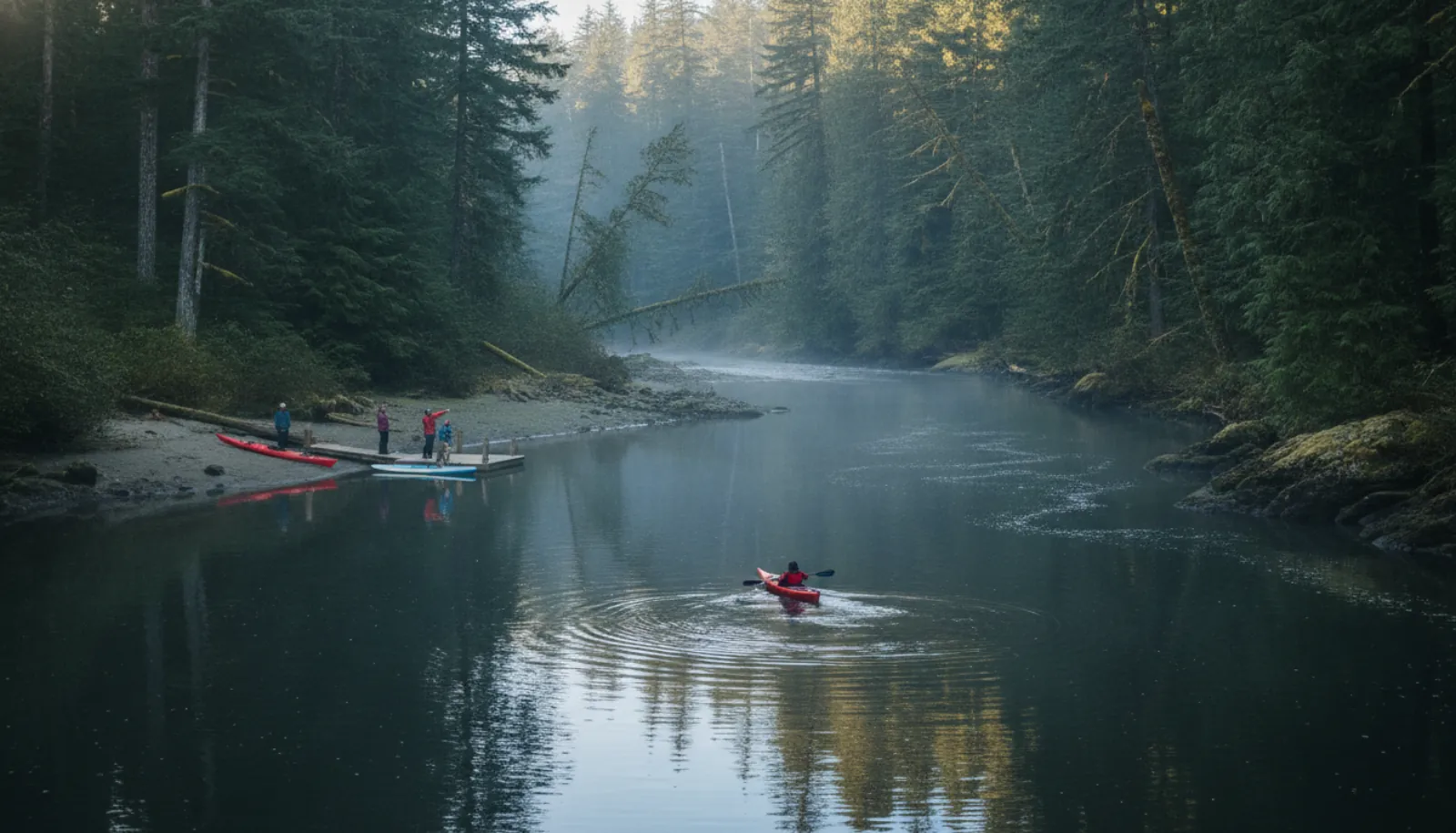
A guided paddling tour is the fastest way to get on the water without owning a boat, misjudging the current, or driving forty-five minutes to a put-in that turns out to be blocked by low water. You show up, the outfitter hands you a boat and a plan, and a guide who has run that stretch a hundred times keeps the group pointed the right way. That is the pitch. What most people do not know is what actually happens between "I booked it" and "I'm back at the truck eating a granola bar."
If you've never taken one, the unknowns tend to cluster around the same handful of questions: How wet am I going to get? How hard is this? Do I need to know anything ahead of time? What does the guide expect me to already know? This walkthrough covers the real rhythm of a first guided trip (kayak, canoe, or SUP), and what separates a good outfitter from one you should keep scrolling past.
Booking the Right Trip for Your Actual Skill Level
The single most common first-timer mistake is booking a trip that sounds fun in the description but is a class above what your body is ready for. Outfitters use a lot of soft language ("beginner-friendly," "family float," "intro"), and it rarely maps cleanly to physical demand. A three-hour flatwater paddle on a protected bay is a different animal from a three-hour "beginner" river trip with a few riffles, even if both are marketed to the same audience.
When you're browsing a trip, look for four specific data points instead of the marketing copy:
- Water type. Flatwater (lake, bay, slow river), moving water (river with current), whitewater (rated rapids), or coastal (open water with wind and fetch). These are not interchangeable.
- Duration on the water. Not the total trip length. A "half-day tour" often includes an hour of shuttle, briefing, and gear-up before the boat ever touches water.
- Distance. A five-mile paddle sounds modest until you're doing it into a headwind.
- Group size and guide ratio. Small groups with a low client-to-guide ratio get more coaching, more attention, and move at a pace that matches the slowest paddler without anyone getting resentful.
If any of those are missing from the listing, email the outfitter and ask. A good one will answer within a business day and be honest about who the trip is not right for. That answer alone tells you a lot.
When to Choose Kayak, Canoe, or SUP
Guided trips come in three main hull types, and each has a different learning curve. Sit-on-top kayaks are the most forgiving: stable, self-draining, and hard to trap yourself in if you tip. Sit-inside kayaks are faster and drier but come with a re-entry skill the guide will cover. Tandem canoes reward communication with a partner and punish the opposite. Stand-up paddleboards look easy from shore and use muscles you didn't know you had after the first hour.
For a first guided trip, most outfitters will steer newcomers toward sit-on-top kayaks on protected water. That is not condescension. It is the fastest way to get a beginner comfortable enough to actually enjoy the scenery instead of white-knuckling the paddle.
What Happens Before You Get in the Boat
Plan on arriving thirty to sixty minutes before the "tour start" time listed on your booking. What happens in that window is where a lot of the trip's safety and enjoyment is decided.
Waiver and check-in. Every legitimate outfitter has you sign a liability waiver. Read it. Some ask about medical conditions, swimming ability, and prior paddling experience, answer honestly, because the guide uses those answers to place you in the group and pick a route.
Sizing and fitting. You'll be fitted for a personal flotation device (PFD), a paddle, and the boat itself. The PFD needs to be snug enough that when you lift it by the shoulders it does not ride up past your ears. A loose PFD in a capsize is worse than useless, it floats away from you when you need it most. Speak up if it feels wrong. The paddle length should match your height and the boat's width; a good outfitter will sort this without you having to ask.
The safety brief. This is the part first-timers tune out. Don't. The guide will cover the specific hazards for that day's water, the signal they'll use to regroup, what to do if you swim, and how to help someone else who swims. If the outfitter skips a real brief or rushes through it, that is a red flag worth noting.
On the Water: The Actual Trip
The first fifteen minutes are the awkward part. You'll wobble, your stroke will feel wrong, and you'll probably drift sideways at least once. This is normal and the guide expects it. A good guide uses this window to give quiet, individual coaching: a small correction on your top-hand grip, a note on where your gaze should be, a reminder to rotate through your torso rather than muscling with your arms.
After that, most guided trips settle into a predictable rhythm:
| Segment | What's Happening | Your Job |
|---|---|---|
| Warm-up paddle | Guide gauges the group's real skill | Follow the pace, ask questions |
| Main stretch | Scenery, wildlife stops, photo breaks | Stay in the pod, watch for hand signals |
| Rest stop | Snack, hydration, bathroom if available | Refuel, don't skip water |
| Return leg | Often into wind or against current | Pace yourself; the guide will draft the slowest paddler |
| Take-out | Guide holds boats, helps everyone land | Wait your turn, don't rush the beach |
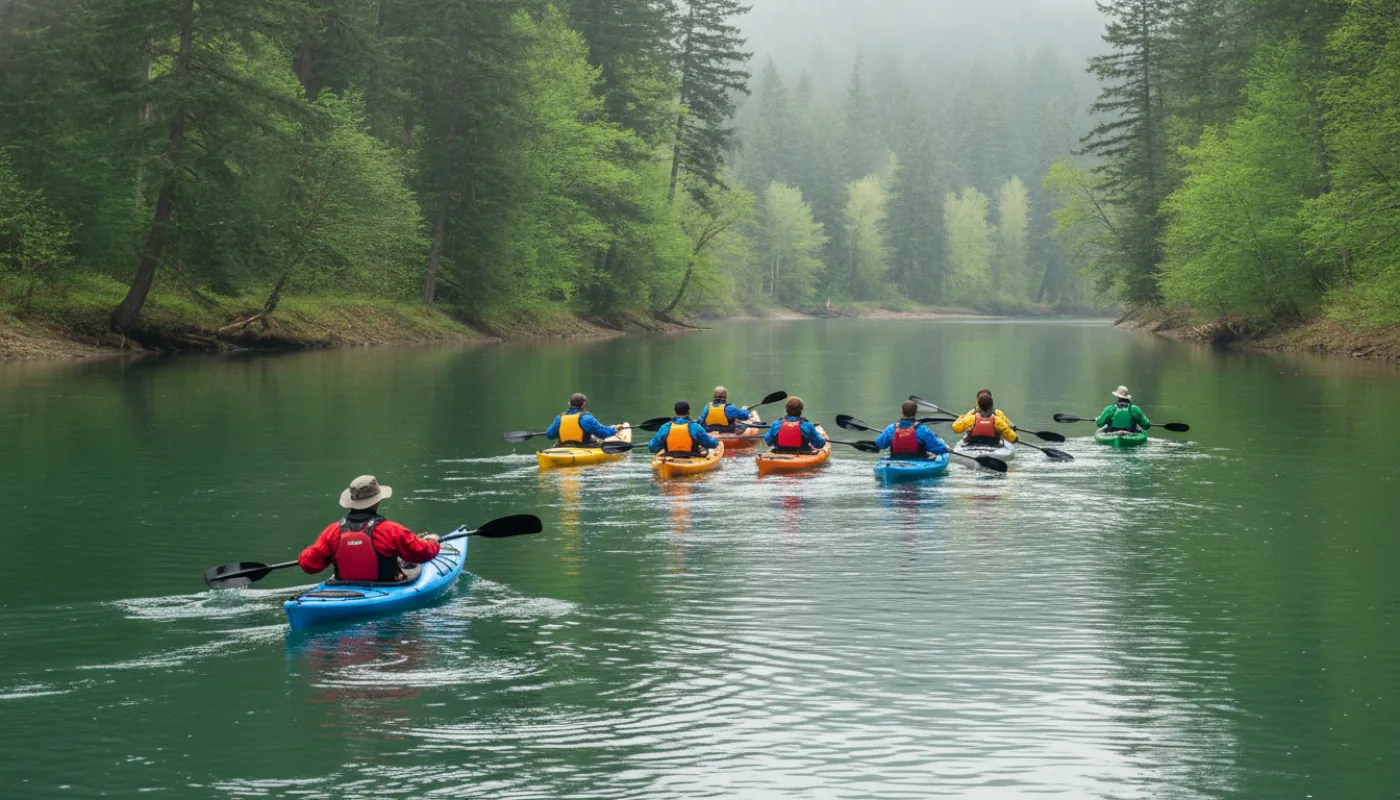
The guide will typically position themselves at the front of the group and have an assistant or "sweep" at the back so no one gets left behind. If you need a break, say so, that is what the sweep is there for. Guides would rather stop for five minutes than deal with an exhausted paddler two miles from the take-out.
Reading the Guide's Signals
Most outfitters use a handful of standardized paddle signals: paddle held vertically overhead usually means "regroup here," paddle held horizontally often means "stop." The guide will teach the specific set they use before you launch. Learn them. Voices don't carry over wind and moving water; visual signals do.
What to Bring (and What to Leave in the Truck)
Outfitters supply the boat, paddle, and PFD. Everything else is on you. What you actually need is shorter than most packing lists suggest:
- Clothing that can get wet. Quick-dry synthetics or wool. No cotton, it stays cold and heavy when wet. In cool weather or on cold water, the outfitter may require or provide a wetsuit; ask ahead.
- Water shoes or old sneakers with a heel strap. Flip-flops fall off in the water. Bare feet cut on rocks.
- A hat with a strap or a cinch. Wide-brim for sun, ball cap otherwise. It will try to blow off; the strap saves it.
- Sunscreen and lip balm. Water reflects UV back up at you. Reef-safe formulas are the norm on coastal trips and often required.
- A refillable water bottle. More than you think you need. Dehydration is the number-one reason people bail early.
- A dry bag for phone and keys. Many outfitters sell or lend one; confirm before you show up.
Leave the DSLR, the drone, the loose sunglasses without a strap, and anything else you'd cry over losing. If you must bring a phone for photos, tether it and keep it in the dry bag between shots.
Water temperature deserves its own note. Cold water is dangerous in ways that don't feel obvious from shore, even a strong swimmer can lose muscle control quickly in cold water. If the trip involves any real chance of immersion in cool conditions, the outfitter should be providing appropriate thermal protection. The National Weather Service's cold water safety guidance is a good primer if you want to understand what's actually happening physiologically. Do not talk yourself out of a wetsuit because the air feels warm.
What the Guide Expects From You
Guides are patient, but they are also managing a group in a dynamic environment. A few small habits make you the client every guide wants back:
- Listen to the brief the first time. Ask questions during the Q&A, not while the guide is repeating instructions to someone else.
- Stay in the pod. Wandering off looks like independence and reads to the guide as a rescue in slow motion.
- Flag issues early. Blister, cramp, seasick, cold hands, all of these are fixable at the start and miserable by the end.
- Tip if the trip was good. Guides in most regions work partly for gratuities. Fifteen to twenty percent of the trip price is the common range for a job well done, though norms vary by area.
When Something Goes Wrong
Even on a well-run trip, someone might tip a boat, drop a paddle, or get separated. The guide has seen all of it before. Your job in that moment is to do exactly what they say and not to freelance a rescue. Most capsizes on flatwater are non-events: you fall in, the guide comes over, they help you re-enter or tow your boat to shore, and you're paddling again in ten minutes. Panicking makes it harder for the guide to help you.
For anything larger (a weather change, an injury, a group member who's struggling), the guide will make a call. That call might mean cutting the trip short, changing route, or waiting out a squall on shore. Trust it. That is what you paid for.
If you're browsing outfitters and want to compare options in your area, most paddling directories let you filter by trip type, water class, and season. Once you've done one guided trip, the second one is a lot easier to book: you'll know the questions to ask, the gear to bring, and the honest answer to "how hard is this, really." That is the point of starting with a guide.