The Southeast has quietly become one of North America's most consistent flatwater paddling regions. Spring-fed rivers that stay calm year-round, coastal sounds that welcome paddlers during the shoulder seasons, and blackwater swamps that feel like paddling through a cathedral, these destinations deliver for novices and experienced paddlers alike. Unlike many regions where "good paddling conditions" means checking forecasts and hoping, Southeast flatwater gives you reliable, protected water that stays manageable even when the wind picks up. This guide maps the best-kept routes where liveries are established, put-ins are straightforward, and the paddling itself is genuinely worth the drive.
Signature Southeast Flatwater Routes
The Southeast's flatwater appeal comes from its geology: limestone springs pump cool, clear water year-round, while coastal plains create vast tidal marshes and sounds protected from the Atlantic swell. These systems are geographically distinct enough that each feels unique, yet they share a common trait, the paddling is predictable and forgiving.
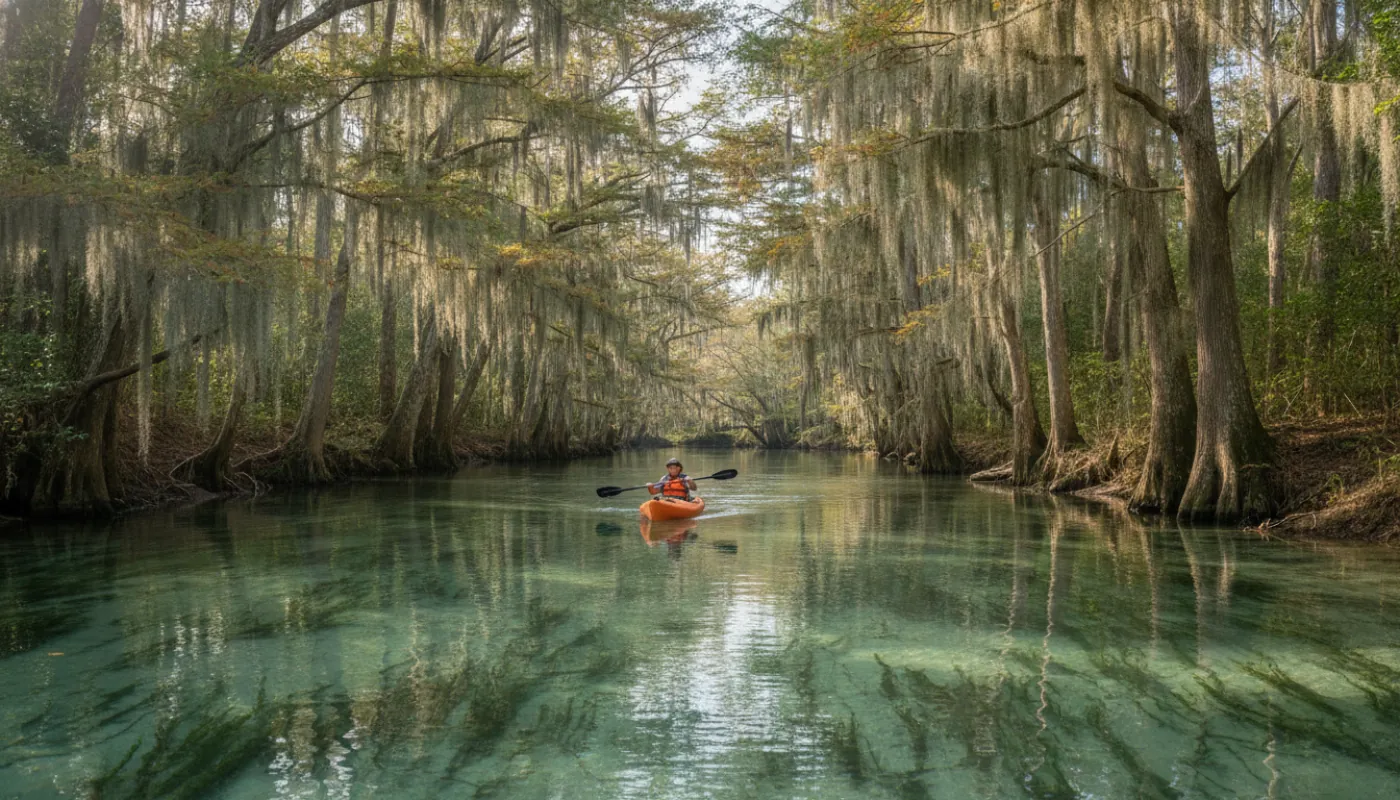
Florida's spring-fed rivers set the regional standard. The Rainbow River, fed by the Floridan Aquifer via Rainbow Springs, flows cold and crystalline for roughly six miles before joining the Withlacoochee River at Dunnellon, maintaining such consistent conditions that a morning paddle feels nearly identical to an afternoon one. The Crystal River, famous for its winter manatee population, stays warm and clear even in December, making it one of the few Southeast destinations where paddling comfort actually improves during the off-season. The Blackwater River runs tea-colored from tannins but remarkably clean over its white-sand bottom: the stain is natural, not murk, and the dark water throws a mirror-like reflection. Each of these rivers supports multiple liveries and stays gentle enough that a wobbly paddler can recover gracefully after an unintended swim.
North Carolina's coastal sounds and South Carolina's tidal marshes follow a different logic but deliver equal rewards. The Pamlico Sound and Albemarle Sound in North Carolina offer miles of protected water, though they demand slightly more attention to tidal windows and wind than the spring rivers do. The ACE Basin (where the Ashepoo, Combahee, and Edisto rivers merge into a delta), ranks among the most scenic coastal paddles on the Atlantic seaboard, with tidal marshes that shift color from green to gold across a single day and wildlife sightings that justify every paddle stroke.
South Florida & Everglades Waters
South Florida's paddling ecosystem splits into two experiences: the springs and run-fed rivers of the North (Rainbow, Crystal, Ichetucknee) and the tidal marshes and mangrove forests of the Everglades and Big Cypress.
For paddlers new to flatwater or seeking absolute stillness, the spring rivers are unbeatable. The current is gentle and the clarity is exceptional, though depths vary from shallow shoals to 15–25 feet in the spring bowls, a PFD is essential even on water this calm. They move slowly enough that paddling upstream is feasible, and stay perpetually cool, a lifesaver during Florida's brutally hot summers. Rainbow and Crystal operate under established livery infrastructure; you can rent a boat, hire a guide, or paddle independently depending on your confidence level. The water clarity lets you watch fish and turtles the entire paddle, so novices stay entertained even when they're not covering ground quickly, liveries here report that most rentals are first-timers.
The Everglades and Big Cypress swamp paddling tells a different story. Here you're paddling through stands of cypress and mangrove, often in water so shallow the paddle blade touches bottom mid-stroke. The wildlife is extraordinary (alligators, manatees, roseate spoonbills, and osprey), but the paddling itself is more meditative than fast. A typical day might cover 3–5 miles but feel like you've traveled through a completely different world. Seasonal timing matters here: winter (November–March) brings comfortable temperatures and peak animal activity; summer paddling is technically possible but demands early starts and heat discipline. Always confirm current access conditions with local authorities, as water levels and wildlife patterns fluctuate seasonally.
Carolina Lakes & Coastal Sounds
North Carolina's Outer Banks and inland sounds represent the Atlantic-facing edge of Southeast flatwater paddling. The Pamlico and Albemarle sounds offer something most river paddles don't, genuine open-water exploration with the option to thread through shallow creeks when bigger water feels overwhelming. On a calm day, these sounds feel nearly oceanic; on a breezy one, they remind you to respect wind funnels across large water bodies. Experienced flatwater paddlers enjoy the challenge; beginners should start in the protected creek systems and work up to the main sound water.
South Carolina's ACE Basin, by contrast, is almost entirely protected tidal marsh and river delta. The paddling is gentle, the scenery is photogenic, and the tidal range, commonly 4–7 feet depending on the lunar cycle, actually makes navigation easier once you learn to read the water. Incoming tide pushes into every creek and marsh, creating natural highways; outgoing tide drains back toward the main channels. Plan launches around the tide table, ride the incoming tide up-creek and return on the ebb, rather than trusting a fixed time of day, since the tide shifts roughly 50 minutes later each day and varies by launch site. This rhythm appeals to paddlers who like their navigation handed to them by physics. The Santee Delta system in South Carolina, where the Santee River meets the Atlantic, functions similarly, miles of protected paddling through working salt marsh, with occasional glimpses of open water.
Seasonal Windows & Water Conditions
Flatwater paddling in the Southeast is genuinely year-round, but seasonal character shifts dramatically. Winter (November–March) brings cool temperatures, lower humidity, and optimal visibility; this is when the springs shine, since 72-degree water stays perfectly refreshing. Everglades paddling peaks in winter too, when temperatures are mild and wildlife congregates around remaining water. Many paddlers consider this the premium season, even though coastal sounds can get windier as cold fronts move through.
Spring and early summer add water volume, winter rains and snowmelt from upstream push flow rates higher. The spring rivers stay clear, but some swamp systems become murkier as tannins rise. By mid-July, Florida's afternoon thunderstorms arrive with clockwork regularity; they're usually brief, but they demand weather literacy and a quick exit plan. Fall (September–November) mirrors spring: moderate temperatures, variable conditions, fewer paddlers on the water, and excellent visibility as water levels stabilize.
Check current water levels, temperature, and any temporary closures before booking a trip. River systems occasionally close for maintenance or after storms, and Everglades access can shift with water levels and occasional wildlife closures. Check with Everglades National Park before booking. Most liveries publish real-time conditions on their websites; don't rely on memory from your last visit.
Trip Planning & What to Bring
Southeast flatwater paddling is equipment-light compared to technical paddling, but preparedness still matters. You need a functional personal flotation device (PFD), non-negotiable regardless of skill level. For water temperature, a rash guard or lightweight spray jacket adds sun protection without bulk; spring water in Florida stays cool enough that bare arms get chilled on longer paddles. Bring a waterproof bag for your phone and keys, a headlamp or whistle clipped to your PFD, and sunscreen rated for water reflection.
Navigation is simpler here than on moving water, but bringing a map or writing down landmarks is smarter than winging it. Cell reception varies wildly in swamp and marsh environments; don't assume your phone will work as a backup. Most liveries provide basic route maps and will suggest paddling distances matched to your pace. A 2-mile route typically takes a beginner 45 minutes to an hour.
When selecting a destination, be honest about your preferences. If you want wildlife and atmosphere more than exercise, Everglades swamp or Santee Delta delivers that. If you want to cover distance and work your fitness, the spring rivers suit that better. If you want scenery without committing to a full day, choose a livery with easy 1–2 mile rental loops. Liveries are the operational hub of Southeast paddling: they provide rentals, shuttle service, and real-time knowledge about seasonal conditions that no online guide can match. Supporting them with your paddle dollar funds the infrastructure that keeps these routes accessible and well-maintained.