Cold water claims more paddlers than rocks, bad weather, or poor judgment combined. Yet most kayakers treat it as a seasonal hazard, something to worry about in spring and fall, then forget. The reality is colder: water below 60°F poses a serious threat year-round in many regions, and the risks are both immediate and brutal. Cold water immersion doesn't give you time to think. You have minutes, not hours, before your body stops responding. Understanding the mechanics of cold water shock, building proper thermal protection, and preparing systematically are not optional considerations for serious paddlers, they are the difference between paddling home and being recovered downstream.
Understanding Cold Water Shock
Cold water shock is not hypothermia, and this distinction matters for your survival. Enter cold water and your body triggers an involuntary gasping reflex you cannot suppress, the response can begin in water below roughly 70°F and is most severe in the 50–60°F range. This sudden gasp can pull water into your lungs before your conscious mind realizes what's happening. Simultaneously, your breathing rate spikes, your heart rate surges, and a wave of disorientation sweeps over you. This is cold water shock, and it kills in seconds to minutes, regardless of your swimming ability or fitness level.
The shock response peaks within the first few minutes and is why most cold water immersions are fatal in the first moments, not later, when hypothermia sets in. Panic makes it worse. A strong swimmer, panic-stricken in cold water, may drown before the water temperature even matters. This is why traditional swimming skills often fail in cold water emergencies. Your training under normal conditions did not prepare your nervous system for the involuntary responses triggered by sudden immersion. The remedy is not more swimming, it is gradual acclimatization and a clear mental framework for the shock response itself. Expecting it, naming it, and practicing controlled breathing in cold water trains your parasympathetic system to reject panic.
A separate danger follows once you are out of the water: afterdrop, a post-immersion phenomenon during rewarming where cold blood from your limbs returns to your core and your temperature keeps falling for a while even after the active heat loss stops. This makes the minutes following immersion as dangerous as the immersion itself. Rough handling during rescue, thrashing to stay warm, or even vigorous rewarming can accelerate core temperature collapse. This is why the best rescue technique is a controlled, gentle extraction followed by careful, passive rewarming in shelter.
Building a Cold Water Layering System
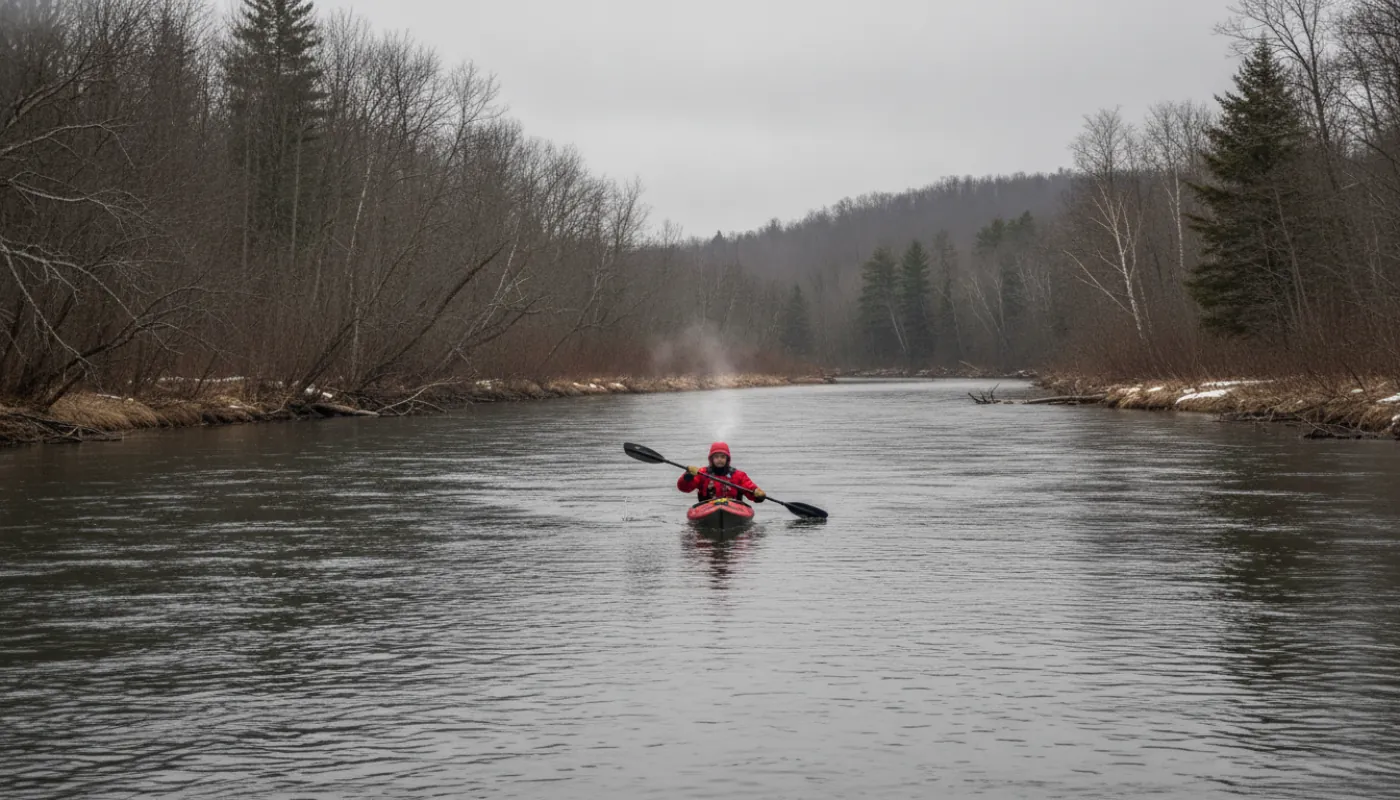
Hypothermia, a core body temperature below 95°F, is the second phase of cold water danger, arriving after shock has passed. Unlike cold shock, hypothermia is slow and predictable. A useful way to hold the timeline is the 1-10-1 rule: roughly 1 minute to get your breathing under control, about 10 minutes of meaningful muscle movement before cold incapacitation robs your hands and limbs of the ability to self-rescue, and about 1 hour of useful consciousness before hypothermia causes you to lose consciousness: all three windows shorten with smaller body size, thinner clothing, and colder water. Note the gap this closes: it is cold incapacitation at ~10 minutes, not loss of consciousness, that ends self-rescue, useful consciousness lasts far longer, which is why a would-be rescuer should never assume a victim is beyond help. That first 10-minute window is why self-rescue must happen fast, and the layering system you wear is the only reliable defense once it closes.
The layering principle is straightforward: trap dead air. Still air is an insulator; water moving through fabric is a conductor that strips your heat away. A modern immersion suit or thick neoprene keeps you warm by the same logic as a wetsuit, it traps water against your skin, and your body warms that thin layer. Dry suits trap air and keep you dry, which is why they outperform wetsuits in very cold water, but only if you also layer underneath them. A dry suit with thin clothing underneath is a confidence trap; you will chill quickly.
Spring and fall paddlers commonly rely on thick neoprene (5–7mm) backed by a thermal layer underneath. Summer paddlers on cold-water rivers often skip thermal layers entirely and wear thin neoprene, assuming a quick rescue will arrive before hypothermia sets in. This assumption is dangerous. In remote areas, rescue may take hours. Even on a regular access point, a pin, entrapment, or injury could keep you in the water far longer than you expect. The cost of a 3mm thermal layer is negligible compared to the margin it provides.
A practical cold water ensemble includes: a wetsuit or immersion suit in the appropriate thickness, a thermal base layer underneath (not cotton: merino wool or synthetic), a neoprene hood if air temperature is also cold, and a PFD-integrated or standalone rescue harness for quick extraction. If you regularly paddle below 50°F, a dry suit becomes non-negotiable. The learning curve is shallow, and the protection is absolute. Many paddlers own both and rotate based on season.
Essential Cold Water Gear and PFDs
A PFD is not optional in cold water, it is your life insurance. Beyond flotation, the modern immersion PFD serves as a thermal layer, a rescue handle, and a psychological anchor against panic. A neoprene-backed PFD rated for immersion adds several degrees of insulation. A PFD with integrated grab handles, bright high-vis color, and a broad chest panel makes rescue faster and safer. Avoid minimalist PFDs in cold water; choose a model designed for immersion and rescue work.
Beyond the PFD, a personal flotation kit should include a bilge pump or bail bucket (you may be able to stay in the boat), a throw rope or rescue bag, a loud pealess marine safety whistle, and a headlamp with an extra battery. A knife or cutting tool may save your life if you catch a line. A GPS communicator or satellite messenger is insurance if you are paddling remote water. None of these items will help if you are alone, but they dramatically improve survival if a partner is with you. Cold water paddling is not a solo activity.
Clothing planning extends beyond the water layer. Air temperature matters. A dry, insulating top layer worn over your immersion suit prevents heat loss between boat and water. Gloves are essential if water temperature drops below 50°F: numb hands cannot paddle, grip, or self-rescue. Neoprene gloves or lobster mitts sacrifice some dexterity but preserve enough function to matter. A hat of any kind (neoprene hood, wool beanie, anything) retains core heat more effectively than bare skin exposed to wind and spray. These details sound trivial until they are not.
Pre-Paddle Assessment and Preparation
Before you launch, assess three variables: water temperature, air temperature, and your ability to get out of the water within a reasonable timeframe. If water temperature is below 60°F, treat it as a cold water paddle, regardless of season. Check it yourself with a thermometer if you can; weather reports are often inaccurate at the specific put-in.
Evaluate the route. Is self-rescue possible if you swim? On a lake, you may be able to re-enter your boat; on moving water, a swim means a long float or reaching shore. On a river with technical moves or tight passages, a swim could mean being swept into obstacles. These realities dictate your gear. A challenging river in cold water demands a dry suit and a rescue plan with other paddlers. A mellow lake in spring cold water may permit 3mm neoprene. Match the system to the risk.
Brief your paddling partners. Everyone should know the water temperature and the assumptions in the plan. A simple agreement ("we stay together," "we turn back if anyone goes in," "we practice re-entry on shore first"), transforms safety from abstract to operational. Solo paddling in cold water is survivable only with exceptional skill and experience; even then, it is unwise.
Check weather and conditions one hour before launching, not the night before. Wind and temperature can shift. Cold water becomes more dangerous in wind because heat loss accelerates and rescue becomes harder. A forecast of 15-knot gusts should adjust your plan: shorten the route, paddle closer to shore, or postpone. This is not timidity; it is respect for the environment.
Response and Recovery from Cold Water Immersion
If you end up in the water, your first task is immediate, resist the urge to thrash. The gasping reflex will try to hijack your breathing. Consciously work against this. Breathe. Control. These two words have saved paddlers who could easily have panicked and drowned. Your boat may still be floating nearby; your partner is nearby; you have time to think, even if your body is screaming. The first few minutes are about managing panic and staying afloat in your PFD.
If you are alone and treading water, conserve energy. Tuck into a fetal position if possible to preserve core heat. If you are with partners, form a huddle or wait for them to approach with the throw rope. Active rescue, where you swim toward something, burns calories and accelerates heat loss. Passive rescue, where someone comes to you, is almost always faster and safer. Talk to your partners during the immersion; keep conscious. Shivering and muscle tension mean your body is still working to stay warm; loss of shivering means hypothermia is progressing rapidly, and you need immediate warming.
Once out of the water, hypothermia management is precise. Remove wet clothes slowly and layer dry insulation. Avoid sudden movement or vigorous activity, which can trigger afterdrop and collapse. Rewarming should be gradual: warm drinks, a sleeping bag, body heat from another person. Rough handling, massage, or hot baths applied immediately after immersion are dangerous. In a true cold water emergency, the victim may appear lifeless or be unconscious, keep them warm and seek immediate medical attention. The rule in severe cold water immersion is "they are not dead until they are warm and dead."
The best response is preparation so thorough that immersion never happens. Solid boat control, cautious route planning, and paddling with competent partners make cold water manageable. Respect it, prepare for it, and it becomes part of your paddling repertoire rather than a fear that keeps you from the water.