If you're shopping for your first kayak, or your first one in years, you'll immediately hit this fork in the road: sit-on-top or sit-inside? The choice shapes everything that follows: your stability, how much water you stay dry in, how fast you move, how much control you have, and how much fun you'll actually have once you're on the water. Both designs excel in different contexts, and neither is universally "better." What matters is matching the kayak to your body, your paddling environment, and what you want to do when you get there. This guide walks through the real differences between the two, cuts through the marketing noise, and gives you a framework to make the right call for your needs.
| Sit-on-top | Sit-inside | |
|---|---|---|
| Initial stability | High, feels planted | Lower, reactive, tippy at first |
| Re-entry after a capsize | Easy, climb back on | Hard, needs a roll or assisted rescue |
| Speed & glide | Slower, more wind drag | Faster, tracks better |
| Keeps you dry & warm | No, you're exposed | Yes, cockpit plus spray skirt |
| Best water | Warm, calm to moderate | Cold, moving, or open water |
| Best for | Beginners, fishing, rentals, hot days | Touring, whitewater, cold water, distance |
Sit-On-Top Kayaks: Stability and Accessibility
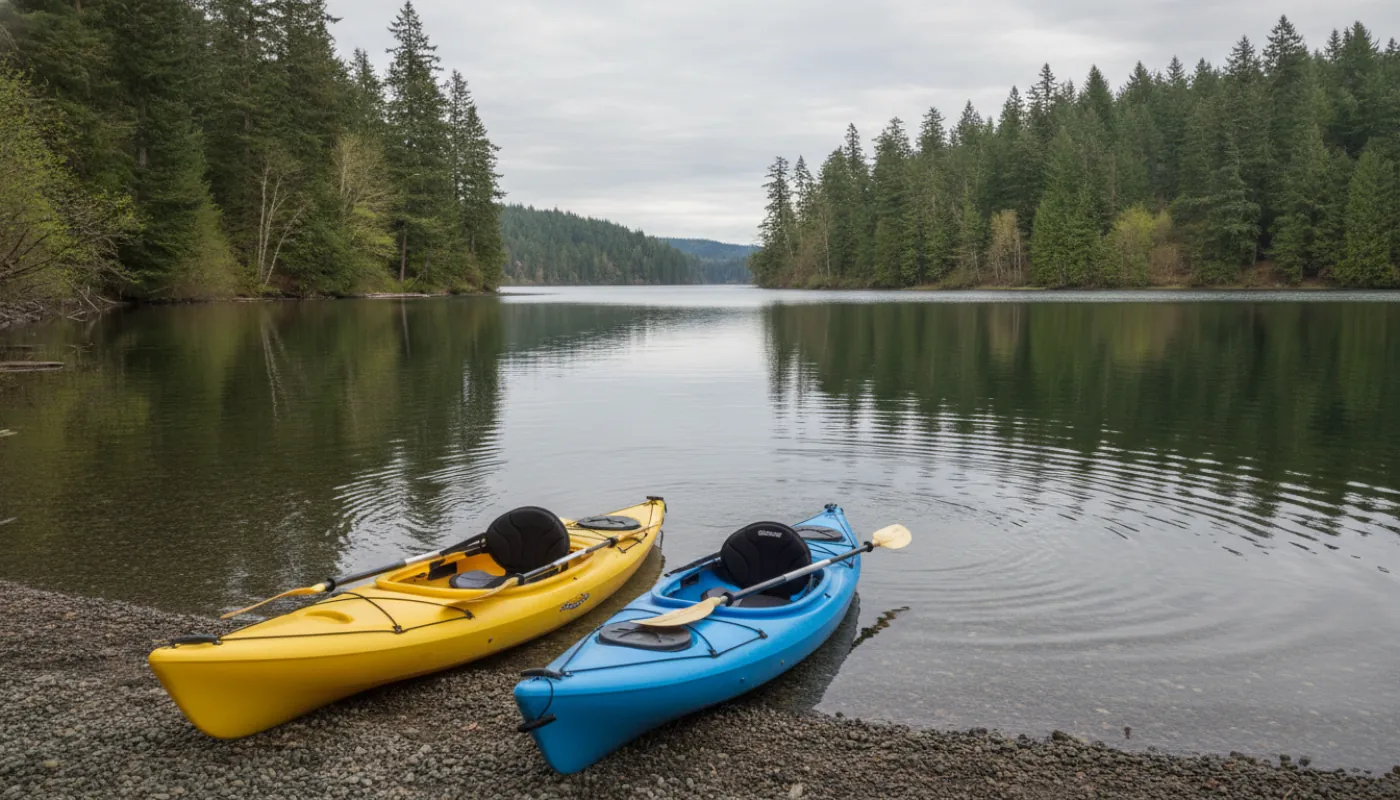
A sit-on-top kayak is exactly what it sounds like: you sit on top of the hull, typically in a recessed seat that's molded into the deck. Your legs extend forward, and you're fully exposed to the air and water. This fundamental design choice creates a very different paddling experience than a sit-inside.
The most obvious advantage of a sit-on-top is stability. Because your center of gravity is higher and you're straddling a wide platform, the kayak feels planted in the water. This translates to confidence for beginners, you can afford to shift your weight more carelessly without triggering a capsize. If you do go over, climbing back in is straightforward. Most sit-on-tops have open decks with hand holds or grab rails, and re-entry from the water is a manageable task. That accessibility also matters for fishing, diving, or any activity where you need to move around or lean over the edge. For recreational paddlers, livery guests, and anyone learning the basics, sit-on-tops remove a major psychological barrier.
Sit-on-top kayaks also shed water naturally. Because you're sitting on top of a sealed hull, water that splashes aboard drains away rather than pooling in a cockpit. This makes them forgiving in mild chop and rain, and ideal for summer paddling on lakes and calm rivers. They're also typically easier to load onto a vehicle or carry because their lower profile and shorter length (recreational sit-on-tops commonly run 9–14 feet, with fishing and tandem models often longer) make them manageable. The trade-off is speed and efficiency; the exposed seating position creates wind resistance, and the wider, flatter hull prioritizes stability over glide.
Sit-Inside Kayaks: Control and Efficiency
A sit-inside kayak (or "sit-in") seats you inside a cockpit, surrounded by the hull on three sides. Your legs tuck under a deck, and your body nestles into the frame of the boat. This intimacy with the kayak creates a direct mechanical bond between your movement and the boat's response.
That connection is the defining strength of a sit-inside. When you lean or shift weight, the boat responds precisely, lean left, it banks left. This level of control makes sit-insides the choice for navigating moving water, reading currents, and executing technical maneuvers. Whitewater paddlers, touring expeditions, and anyone covering long distances favor sit-insides because the hull design is optimized for speed and the paddler's weight is centered low, improving tracking and reducing drag. A sit-inside typically moves faster than a sit-on-top of similar length, and the energy you put into each paddle stroke translates more directly into forward momentum.
Sit-insides also keep you drier. Water that splashes aboard stays in the cockpit rather than running off, but the enclosed design and the spray skirt, a fabric panel that stretches around your waist and the cockpit rim, seal out most water entirely. This is crucial in cold water, where staying dry means maintaining core body heat and survival. Sit-insides come in a range of lengths (recreational models around 10–12 feet, dedicated touring and sea kayaks typically 14–18 feet) and hull designs tailored to specific water types, from flatwater to river racing to open ocean. The drawback is complexity: they're harder to re-enter if you capsize, steeper to learn, and less forgiving of weight shifts. They also cost more and often weigh more, putting them out of reach for casual paddlers or those with limited storage.
Stability, Re-Entry, and Comfort in Different Scenarios
The stability conversation goes deeper than raw hull width. A sit-on-top feels stable because it's hard to tip; a sit-inside feels tippy because it's reactive to subtle weight changes. Beginners often interpret "unstable" as "bad," but experienced paddlers crave exactly that responsiveness. Both have their place, the question is what suits your context.
If you capsize a sit-on-top, you're already swimming, and the boat is right there. Climbing back aboard is a matter of swimming to the side, grabbing a handle, and heaving yourself back on the deck. It's wet and tiring, but physically straightforward. Sit-on-tops are excellent for warm-water paddling and settings where a swim is part of the day (kayak fishing in summer, rental fleets, youth paddling camps). If you capsize a sit-inside in cold water or moving current, re-entry is far harder and you're in genuine danger. That's why whitewater paddlers and ocean tourers train extensively in roll technique, they practice the kayak roll to stay upright rather than swimming. The higher stakes of a sit-inside demand higher skill and preparation.
Comfort is personal and scenario-dependent. A sit-on-top's open seating offers easy leg movement and a lower psychological barrier. Some paddlers love the openness; others find the exposed position uncomfortable on long paddling days. A sit-inside's enclosed cockpit creates security and reduces wind exposure, but the confined space isn't for everyone. A good fit (the kayak's seat, thigh braces, and footrest adjusted to your anatomy), matters far more than the kayak type. If you're renting or borrowing before buying, test both types and pay attention to where your body feels supported versus where it aches after an hour.
Paddling Environment: Water Type and Conditions Matter Most
Your chosen water type should weigh as heavily as personal preference in this decision. Sit-on-tops excel on calm to moderate-wave lakes, ponds, and protected bays where you're unlikely to flood the boat. They're the standard choice for kayak liveries and guided paddling schools because they're safe, stable, and forgiving of varied guest skill levels. For flatwater and small waves, a sit-on-top delivers a relaxing, accessible experience.
Sit-insides dominate in moving water: rivers with current, coastal areas prone to chop, and any environment where the water temperature is low enough that a swim becomes a survival problem. A sit-inside with a spray skirt keeps water out and your core warm. Whitewater kayakers choose sit-insides because the hull design and the cockpit seal allow you to brace and roll. On rivers, control is safety; a kayak that responds instantly to your input lets you avoid rocks, navigate channels, and recover from mistakes. If you're paddling cold water (spring snowmelt, ocean, northern lakes), a sit-inside is the responsible choice.
Sit-on-tops have limitations in steep whitewater and cold-water situations, but modern designs continue to improve. Some sit-on-tops now feature splash guards and higher sides to keep water out of the cockpit, blurring the line with sit-insides. Still, if you're planning expeditions or frequent cold-water paddles, a traditional sit-inside remains the proven tool.
Choosing the Right Type for Your Paddling Style
The decision ultimately rests on who you are as a paddler and what you're going to do. If you're a beginner, a casual recreational paddler, a fishing enthusiast, or someone eager to try paddling without overwhelming complexity, a sit-on-top is an excellent starting point. The stability and ease of re-entry remove barriers to entry and let you build confidence on the water. Many paddlers own both a sit-on-top and a sit-inside, using each for its purpose.
If you're drawn to moving water, distance paddling, cold-water environments, or the technical challenge of maneuver and control, a sit-inside opens those doors. The investment in learning and the higher cost are justified by the expanded range of paddling you can pursue. Whitewater guides, touring outfitters, and expedition paddlers choose sit-insides because the control and protection they provide are non-negotiable.
Before you commit to a purchase, rent or borrow both types if you can and paddle them in the conditions where you'll actually be. Pay attention to your comfort, how responsive the boat feels, and whether the paddling style aligns with your goals. Talk to local operators about what they run, they've chosen their boats for good reason. Whatever type you land on, invest in a properly fitted personal flotation device (PFD) approved for paddling and wear it every time you're on the water. The kayak type matters less than staying safe and having fun.