Skip to content
Top-rated outdoor gear, ranked

Best Of 2026

Best Kayak Paddles of 2026

Our top 9 picks, independently ranked. Budget to premium.

A kayak paddle is the single most performance-critical piece of gear you own, more than the boat itself. It's the only thing connecting you to the water, and every stroke you take multiplies its weight, stiffness, and blade shape thousands of times over a day on the water. A cheap aluminum paddle and a light carbon one can turn the same three-mile paddle into either a chore or a joy, which is exactly why experienced paddlers say to spend on the paddle before you upgrade the kayak.

The market splits cleanly into three tiers, and the jump between them is real. Entry paddles ($40–$130) pair aluminum or fiberglass shafts with tough polypropylene or nylon blades, heavier and less efficient, but bombproof and forgiving of rocky launches. Mid-range paddles ($150–$320) introduce carbon-fiber shafts and stiffer glass-reinforced or fiberglass blades, cutting swing weight dramatically and killing the annoying "flutter" that makes a blade twist mid-stroke. Premium paddles ($330–$500) go full carbon, shaving ounces that translate to noticeably less shoulder and wrist fatigue over long touring days.

This guide is built for recreational and touring paddlers from beginner to intermediate: the folks paddling lakes, calm rivers, bays, and the occasional coastal tour, not whitewater specialists or racers. We've ranked by genuine overall value for that audience, not by price, so the sweet-spot paddles most people should actually buy sit at the top, with the ultralight flagships (excellent, but overkill for a first paddle) and the rock-bottom budget picks placed honestly where they belong.

At a glance

#ProductPrice
1$160–$195
2$250–$320
3
Magic Plus

Carlisle

$90–$130
4$210–$260
5$70–$90
6$215–$260
7$440–$500
8$340–$430
9$40–$55
Sting Ray Hybrid 2-Piece
Best OverallMid-range

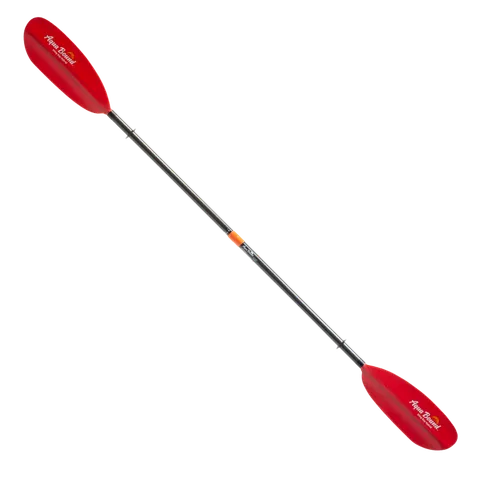
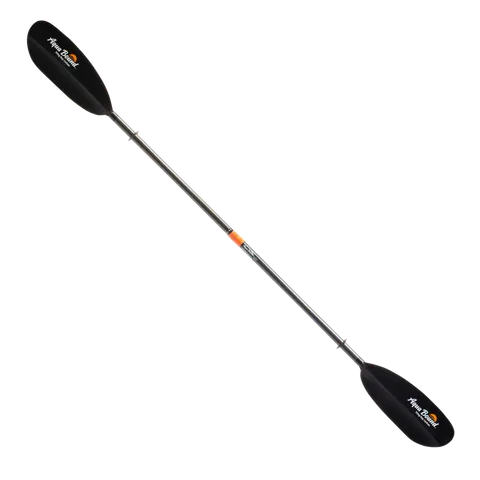
1. Sting Ray Hybrid 2-Piece

Aqua Bound

$160–$195

A 100% carbon shaft paired with abXII fiberglass-reinforced nylon blades delivers a light, flutter-free stroke at a price most recreational paddlers can justify. It's the classic 'buy this first and don't look back' upgrade.

Best for: The recreational/touring paddler who wants one paddle that punches far above its price

Full carbon shaft cuts swing weight and fatigue · Sturdy fiberglass-reinforced nylon blades shrug off rocky launches · Snap-button Posi-Lok ferrule locks with zero blade wobble · Excellent performance-per-dollar for beginners to intermediates

Nylon blades aren't quite as stiff or efficient as full-carbon · Low-angle blade shape less ideal for aggressive high-angle paddlers

Camano 2-Piece Straight Shaft
Mid-range

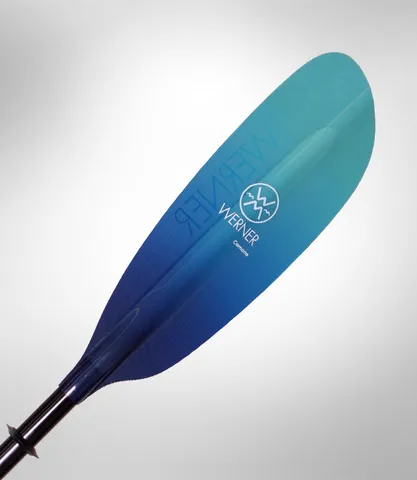
2. Camano 2-Piece Straight Shaft

Werner

$250–$320

Werner's award-winning low-angle touring benchmark: fiberglass blades that are stiff and buoyant, a light swing weight, and the superb Smart-View adjustable ferrule. If you tour, this is the paddle to grow into.

Best for: Distance-minded recreational tourers ready to invest in a lifetime paddle

Stiff fiberglass blades give efficient, quiet catch and release · Light swing weight for its class reduces long-day fatigue · Smart-View ferrule adjusts feather in precise 15° increments · Proven durability and strong resale value

Pricier than comparable mid-tier paddles · Low-angle only, high-angle paddlers should look at the Shuna

Magic Plus
Best ValueBudget

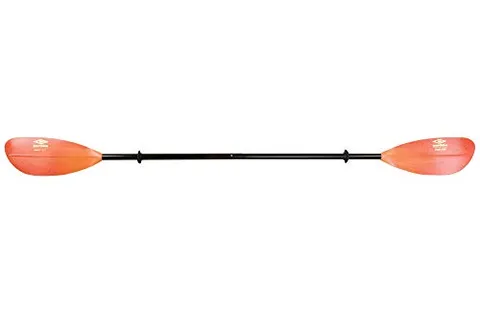
3. Magic Plus

Carlisle

$90–$130

A lightweight fiberglass shaft and stiffer glass-reinforced nylon blades make this the smartest step up from a big-box aluminum paddle, real touring feel for around a hundred bucks.

Best for: Budget-conscious paddlers who still want a genuine performance upgrade

Fiberglass shaft is noticeably lighter than aluminum · Glass-reinforced nylon blades resist chipping and cracking · Multiple lengths and colors for proper fit · Outstanding performance for the price

Heavier and less efficient than carbon-shaft paddles · Simpler ferrule with fewer feather settings than premium models

Manta Ray Carbon 2-Piece
Mid-range

4. Manta Ray Carbon 2-Piece

Aqua Bound

$210–$260

The high-angle sibling to the Sting Ray: a full carbon shaft with larger, carbon-reinforced blades that grab water hard for quick acceleration and confident maneuvering.

Best for: Athletic paddlers and sit-on-top/fishing kayakers who want high-angle power

Full carbon shaft with stiff carbon-reinforced abX blades · Larger blade area delivers strong high-angle power · Posi-Lok ferrule is rattle-free and precise · Handcrafted in Wisconsin with solid warranty support

Bigger blades mean more effort per stroke than a low-angle paddle · Heavier swing weight than the smaller-bladed Sting Ray

Whisper 2-Piece Recreational
Best BudgetBudget

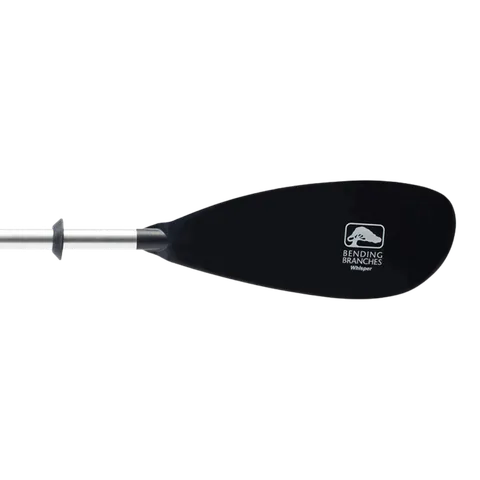
5. Whisper 2-Piece Recreational

Bending Branches

$70–$90

One of North America's best-selling recreational paddles: an aluminum shaft with dihedral polypropylene blades and comfortable grips, hand-built in Wisconsin. A dependable, affordable first paddle.

Best for: First-time kayakers and casual lake paddlers on a tight budget

Proven, forgiving polypropylene blades handle abuse well · 0°/60° feather adjustment and comfort grips · Splits into two pieces for easy transport and storage · Backed by a reputable USA paddle maker

Aluminum shaft is heavy and cold on the hands · Flexier blades flutter more than fiberglass or carbon

Sting Ray Carbon 2-Piece
Mid-range

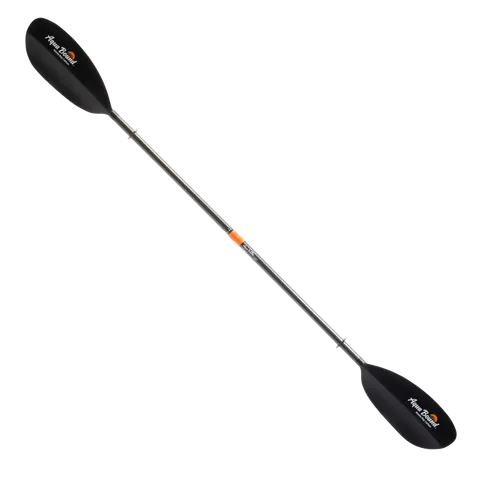
6. Sting Ray Carbon 2-Piece

Aqua Bound

$215–$260

A featherweight ~28.75 oz low-angle paddle with a 100% woven carbon shaft and carbon-reinforced blades. Named Paddling Magazine's Best Paddle in 2023, it's a near-premium experience at a mid-tier price.

Best for: Distance tourers who want carbon-light feel without full-flagship pricing

Very light at roughly 28.75 oz for effortless strokes · Woven carbon shaft with stiff carbon-reinforced abX blades · Smooth, flutter-free catch ideal for long low-angle days · Handcrafted in the USA

Costs meaningfully more than the fiberglass-blade Hybrid · Mid-sized low-angle blade lacks a high-angle punch

Kalliste 2-Piece Straight Shaft Carbon
Best PremiumPremium

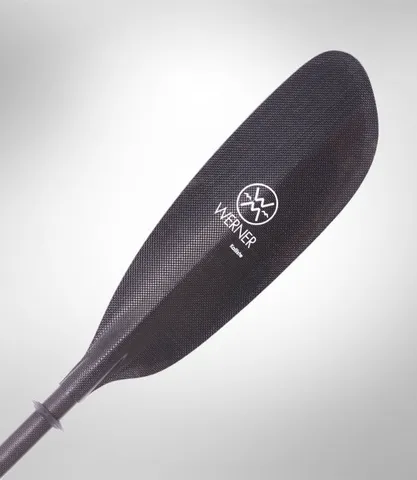
7. Kalliste 2-Piece Straight Shaft Carbon

Werner

$440–$500

Werner's flagship low-angle touring paddle: full-carbon buoyant blades and shaft that create an exceptionally light, smooth stroke, with Dynel-reinforced edges for durability. The paddle to end paddle-envy.

Best for: Serious tourers who log long days and want the lightest possible paddle

Full carbon blades and shaft for the lightest swing weight · Buoyant blades give quiet, effortless catch and exit · Dynel edges resist impact and abrasion · Smart-View ferrule for precise feather adjustment

Premium price is hard to justify for beginners · Low-angle only, not built for aggressive high-angle strokes

Shuna Carbon Straight Shaft
Editor's PickPremium

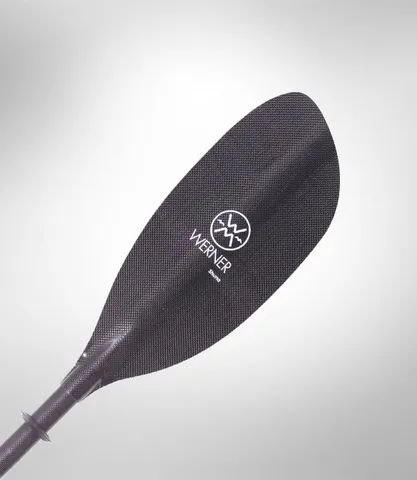
8. Shuna Carbon Straight Shaft

Werner

$340–$430

Werner's best-selling premium high-angle paddle: mid-sized fiberglass blades on a full carbon shaft that deliver powerful, flutter-free strokes in every direction. A versatile pick for the athletic paddler.

Best for: Intermediate high-angle paddlers wanting one do-it-all performance paddle

Carbon shaft plus stiff fiberglass blades for powerful, flutter-free strokes · Versatile mid-sized high-angle blade suits technical and touring use · Light swing weight with long-standing durability · Smart-View adjustable ferrule

High-angle style isn't the most efficient for relaxed distance cruising · Premium price sits well above the mid-tier value picks

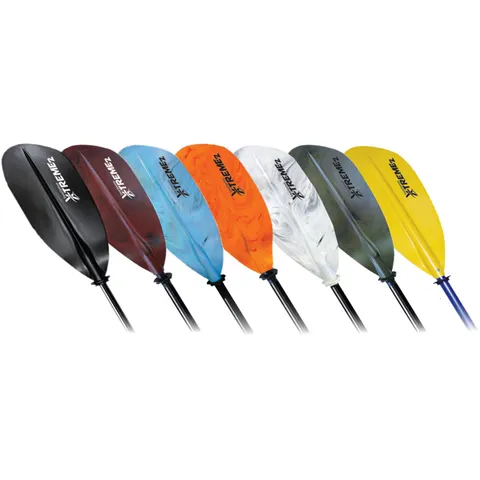
SeaSense X-Treme II
Budget

9. SeaSense X-Treme II

SeaSense

$40–$55

A rock-bottom two-piece aluminum-and-polypropylene paddle for the paddler who needs a functional spare or a first paddle at the lowest possible cost. Foam-padded grips add real comfort at this price.

Best for: Absolute-budget beginners or anyone needing a cheap backup paddle

Extremely affordable, often around the $50 mark · Two-piece design breaks down for transport and storage · Foam-padded grips reduce blisters and hand fatigue · Proven, long-running budget design

Heavy aluminum shaft and flexy blades sap efficiency · Basic ferrule with limited feather options · Not built for long days or serious touring

How we choose

We selected these paddles by cross-referencing hands-on testing from independent outlets (OutdoorGearLab, GearJunkie, Paddling Magazine) with manufacturer specs, retailer pricing, and long-term owner reviews, then weighted them for the beginner-to-intermediate recreational and touring paddler. Ranking reflects overall recommendation (the balance of weight, blade stiffness, durability, adjustability, and price-for-what-you-get), not price alone, which is why a mid-tier value paddle can outrank a full-carbon flagship for this audience. The tiers are defined by construction: budget = aluminum or fiberglass shaft with polypropylene/nylon blades; mid = carbon shaft with glass-reinforced or fiberglass blades; premium = full-carbon shaft and blades built to minimize swing weight and fatigue. We received no compensation, samples, or input from any manufacturer or retailer; product links may earn a commission but never influence selection or ranking, and every pick is a real, currently-available 2026 model.

Common questions

Length is driven by two things: how wide your boat is and how tall you are. As a rough guide, most recreational paddlers in a 28–32" wide kayak want a 220–230 cm paddle; wider boats (sit-on-tops, fishing kayaks) or taller paddlers move up to 240–250 cm, while narrow touring kayaks and shorter paddlers go to 210–220 cm. Both Werner and Aqua Bound publish sizing charts that cross your height against boat width. Check one before buying, because a paddle that's too long forces a wide, inefficient stroke and a too-short one bangs your knuckles on the deck.

Low-angle paddling uses a relaxed, near-horizontal shaft and a long, narrow blade: it's the efficient, low-fatigue style for recreational touring and covering distance (think Werner Camano, Aqua Bound Sting Ray). High-angle uses a more vertical, aggressive stroke close to the hull with a shorter, wider blade for quick acceleration and maneuvering (Werner Shuna, Aqua Bound Manta Ray). Most beginners and casual tourers are happier with a low-angle paddle; choose high-angle if you're an athletic paddler who wants power and precision.

For most paddlers, the biggest gain is going from aluminum to a carbon or carbon-blend shaft, not from mid-carbon to full-carbon. A carbon shaft drops swing weight and dampens the flutter that makes cheap blades twist, so every stroke feels smoother and you fatigue less on long days. That's why a mid-priced carbon-shaft paddle like the Aqua Bound Sting Ray Hybrid is the value sweet spot. Full-carbon flagships shave a few more ounces, genuinely noticeable on all-day tours, but the returns diminish, and a beginner is better served putting that money toward a paddle that fits their boat and stroke.

Not interchangeably. A kayak paddle is double-bladed; a canoe uses a single-blade paddle and a SUP uses a long single-blade paddle with a T-grip, both very different tools. That said, sit-on-top and inflatable-kayak/SUP crossover boats are often paddled with a double-blade kayak paddle, and a few brands sell convertible shafts. If you're primarily a kayaker, buy a proper kayak paddle; if you split time on a SUP, look specifically at a convertible or a dedicated SUP paddle rather than forcing one tool to do both.

Feathering is the offset angle between the two blades, it reduces wind resistance on the out-of-water blade during each stroke. Most modern two-piece paddles have an adjustable ferrule (Werner's Smart-View, Aqua Bound's Posi-Lok) that lets you set 0°, 45°, 60° or in-between. Beginners can happily start at 0° (unfeathered) for simplicity and dial in a mild 15–45° feather later as their wrists develop a preference. Adjustability is one of the clearest reasons to step up from the cheapest fixed paddles.

Some links are affiliate links, and we may earn a commission at no extra cost to you. It never affects our rankings.

In your pocket

Take every launch with you.

Free, no account needed. Put-in maps, named river reaches, and your trip log in your pocket.

  • Every launch in your pocket

  • Named reaches with class ratings on the map

  • Log your paddles in one timeline

  • Find the next put-in wherever you roam

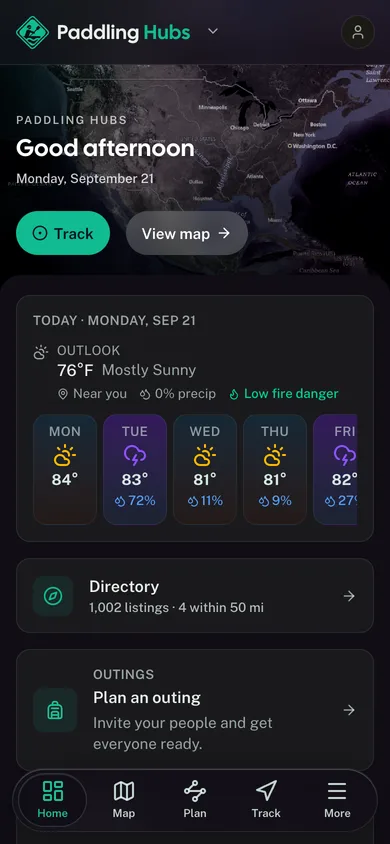
The Paddling Hubs app dashboard

For operators

Run your paddling business?
Launch your branded surface.

Get your own branded surface in the Paddling Hubs app and a directory listing in minutes. Bookings, digital waivers, and your whole operation live in one cockpit.